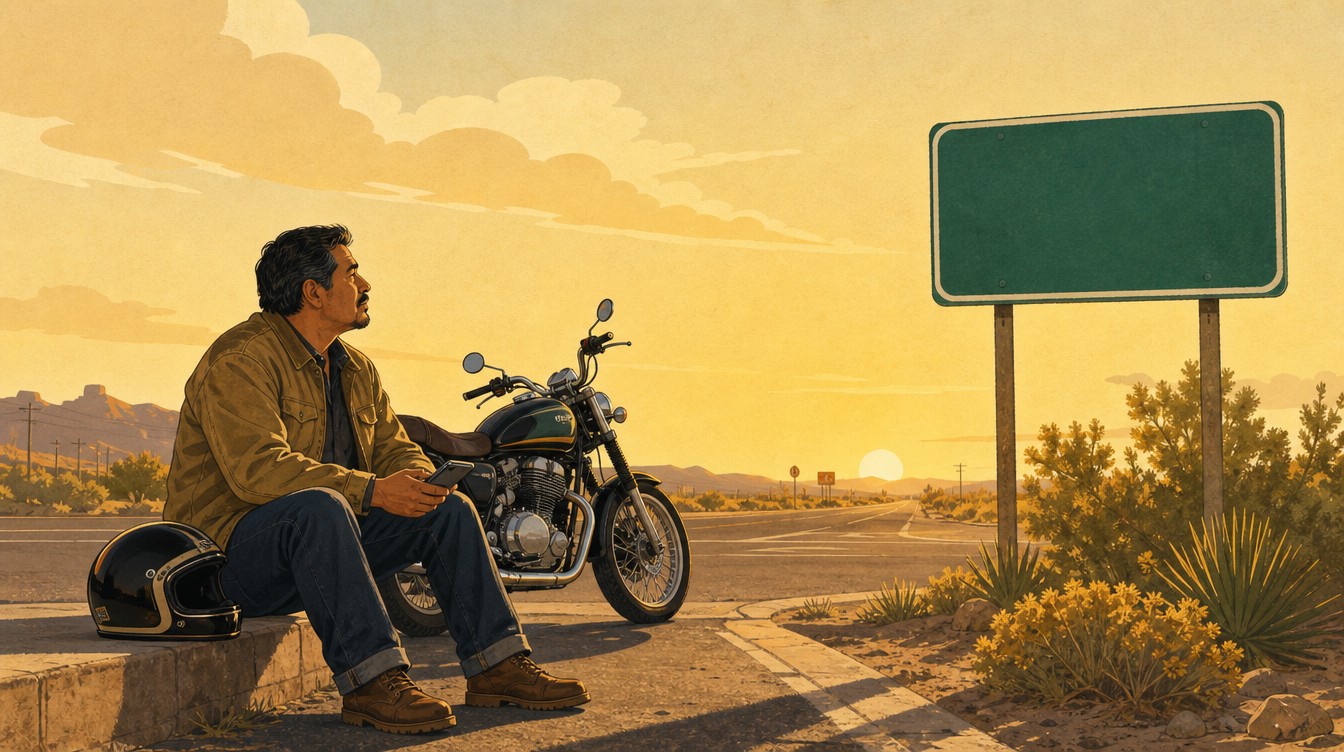
"The motorcycle came out of nowhere."
If you ride, you have heard it. Mike heard it while he was still on the ground on Kietzke Lane, next to a sedan that had turned left across his lane on a green light.
Thirty years, first scratch
Mike is 52, an electrician in Reno, and he had ridden thirty years without one. He laid the bike down rather than go through her windshield.
A broken collarbone. Two cracked ribs. Eight weeks off the tools, and electricians do not get paid for weeks off the tools.
The insurance company had already decided whose fault it was.
"As a courtesy, given the circumstances"
A week later her insurer offered $5,000. The circumstances, in their version, were partly Mike's.
He knew that was wrong. He did not know how to make an insurance company agree, or what being right was worth.
But he had something they did not know about yet.
The footage
His helmet camera showed a clear lane, a green light, and a sedan turning across it. A friend from his riding club told him to check before he answered the adjuster again.
He did the check that evening. Eight questions, no card, no Social Security number. He tapped Motorcycle on the first screen.
The estimate for a not-at-fault motorcycle crash in Nevada, with a broken bone and eight weeks of lost work, came back in a range that ended the conversation about courtesy. We will get to the number.
Then a person called, and told him something riders need to hear.
Motorcycle cases carry a bias
The case specialist said it plainly. The lawyers who win these cases are the ones who handle them all the time. A Nevada lawyer whose focus is motorcycle crashes called him, and asked for the footage first.
He never paid out of pocket. His case closed for $128,000.* The company that offered $5,000 paid it.
The first statement is the one that hurts
You do not have to give the other driver's insurer a recorded statement, and in a motorcycle case the first statement is usually the one used against the rider. People with a lawyer get about 3.5 times more than people who settle alone, according to the Insurance Research Council.
Which brings us to you.
Are you in this story?
You ride. Someone turned in front of you. They said you came out of nowhere. The offer came with the word courtesy.
Then you are where Mike was on the ground. His case is his. Yours is yours. The check tells you where you stand, in 45 seconds, for free.